
How do you change circular saw blades safely?
This regular maintenance activity requires the manual handling of large, heavy, and sharp circular saws in and out of sawmilling machinery.
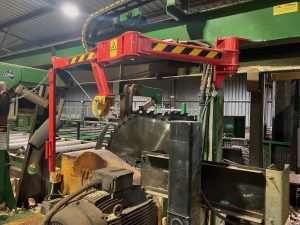
The Gibson engineering team, in collaboration with timber industry operations and maintenance specialists, has developed a new and innovative maintenance-assist device to help improve the safety of people changing circular saw blades in sawmills.
The Gibson Safelift Saw Gantry will help you to reduce the risk of serious injury when changing circular saw blades.
According to the Workplace Health and Safety Queensland Sawmilling industry health and safety guide 2017, there are several safety precautions and mitigation steps to consider when manually handling saw blades in sawmills.
See below an extract from the Safety Guide with highlighted sections where the Gibson Safelift Saw Gantry can make a positive impact on safety.
4.15 Blade handling
Hazards associated with blade handling
- Transportation route – steps, walkways, proximity to other workers and equipment, possible trip hazards, visibility, length of route.
- Transportation methods – Avoid manual whenever possible.
- Size and weight – large diameter saw blades and bandsaws pose particular handling hazards to legs and arms when carried or lifted manually.
- Storage – proximity to walkways and people.
- Carrying – methods of actually holding onto the blade.
- Sharpening – use of abrasive wheels/ grinders.
Control measures for handling blades
- Store circular saw blades in purpose-built racks when not in use. Guard them and, if possible, place them away from walkways and access routes.
- Restrict access to areas where large blades are stored.
- Do not leave old or unused saw blades unprotected in the work area.
- Cover bandsaw teeth during transportation and storage.
- Use a container to transport smaller blades.
- Circular saw blades should be covered at all times during transportation and storage. Consider the use of kevlar or leather covers.
- Consider the use of trolleys and mechanical lifting aids for transporting large diameter saw blades and bandsaws. Where mechanical lifting aides are not available, seek the assistance of others when undertaking a heavy or awkward lift.
- A simple carrying tool can be made to ensure the edges of circular blades are angled away from legs during carrying.
- Use the safest route when transporting large blades – avoid steps, stairs and rough floor surfaces.
- Only trained personnel should undertake saw sharpening and maintenance.
- Properly guard sharpening and grinding equipment.
- Fit a dust removal unit to grinding machines.
- Ensure grinding wheels are the correct type for the task.
- Automatic sharpening equipment must be located away from walkways and access routes, with appropriate warning signs and barriers to prevent inadvertent contact. Consider restricting access to the sharpening area.
- Wear eye protection when near operating grinders or saw sharpeners.
- Use cut-resistant gloves (made from materials like Kevlar or ballistic nylon) when handling saw blades.
The Gibson Safelift Saw Gantry joins the existing Gibson Remote Sawpacker adjustment device as another practical operator assist device to help Sawmillers reduce the risk of injuries at their sites.
View more details on the Gibson Safelift Saw Gantry
To learn more about how we can assist you with safely changing a Circular Saw Blade, Contact Us.