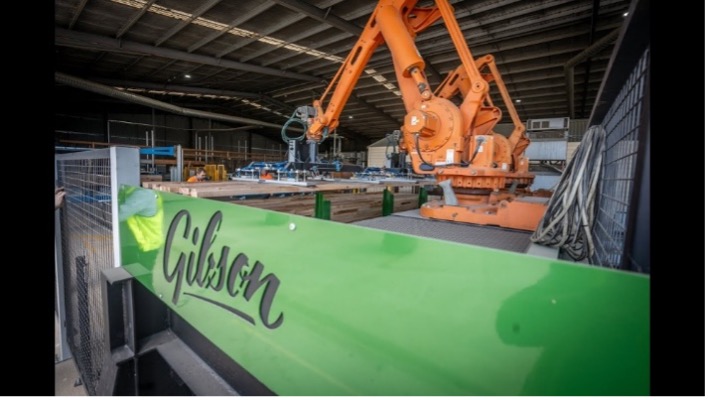
Australian sawmills have long faced challenges related to the sorting and stacking of timber. This article will explore the methods currently available, the challenges sawmills face, and the pro’s and con’s of each sorting and stacking method. From hands on manual sorting and stacking through to highly automated machinery and even the use of robotics, we explore them all.
- Manual Sorting and Stacking – Roundtable, Belt outfeed, Chain or wire rope conveyor
- Pocket Sorters and stackers
- Sling Sorters and stackers
- Dry mill stackers
- Robotic Sorting and Stacking
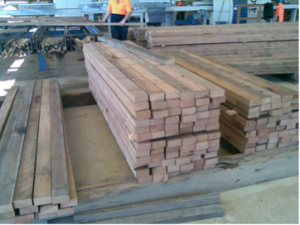
Manual Sorting and Stacking
Manual sorting and stacking of timber is labour intensive, but is also the least capital-cost intensive method to sort and stack timber. Low to mid volume production sawmills tend to use manual stacking techniques combined with product outfeed systems such as Roundtables, Belt outfeeds, GreenChain or Wire Rope conveyor outfeeds, and then manually sort and stack from these outfeeds onto the timber packs or trolleys.
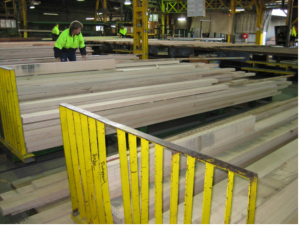
However, as production volumes increase, manual stacking becomes more problematic.
Sawmills face challenges such as labour shortages, inconsistent quality control, and inefficiencies in space management. Manual stacking is also one of the toughest and most physically demanding jobs in our industry, and presents significant WHS risks, and difficulties in attracting and retaining staff to perform the tasks.
Automated Sorting and Stacking
Automatic timber sorting and stacking systems are revolutionising the sawmill industry by enhancing efficiency and accuracy in timber handling. These systems utilise advanced technologies such as sensing, automated materials handling, and robotics to classify and stack timber based on size, grade, and species. This automation not only reduces manual labour but also minimises human error, ensuring that timber is sorted quickly and consistently. Automated systems include, Pocket Sorters, Sling Sorters, Singulators/Unscramblers, Stick Placers, Robotic Sorting and Stacking, and Vertical Stackers
Pocket Sorters
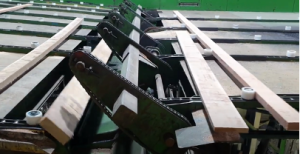
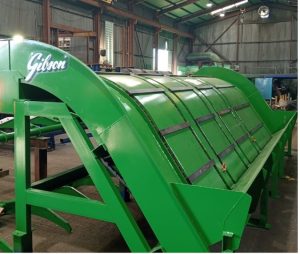
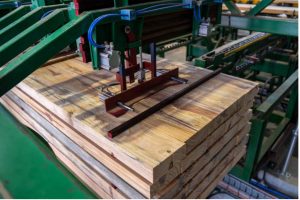
Pocket sorters allow you to automate the sorting of boards into bulk bins for each board size/length sort, and then when a bin is full, you can release the full bin to a conveyor, singulated and then stacked with a mechanical tray stacker to create a full timber pack. Stick placers can also be incorporated to insert sticks between layers.
The system can be partially automated, or fully automated, eliminating the difficult heavy lifting required in manual stacking methods, and providing capacity for high speed and large volume sorting and stacking.
When weighing up the benefits of Pocket sorting and stacking systems you will need to consider the investment in capital equipment required, and the large footprint of the machinery on your sawmill site.
Sling Sorting
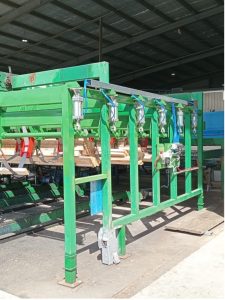
Similar in benefits to Pocket sorters, but on a smaller scale and lower volumes, Sling sorters are an effective step up from manual stacking methods.
The timber boards can be sorted by size/length into slings. When a sling is full, it can be released onto a conveyor, singulated and then stacked with a mechanical tray stacker to create a full timber pack.
Singulator/Unscrambler
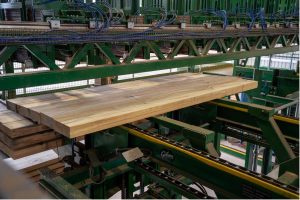
With either an Automated Pocket Sorter, or Sling Sorter, a method to singulate each bundle of boards, and then stack them automatically, along with stick placement between layers in the pack, is required.
Automated Layer Stacker
 Stick Placer
Robotic Sorting and Stacking
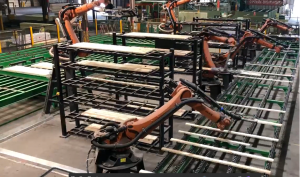
Robotic Sorting and Stacking systems enable the sorting and stacking processes to be performed together by the robot picking and placing boards onto the timber packs. This increases flexibility, and reduces the installed system footprint.
When considering this type of system, the potential business benefits can be assessed along with the capital cost of the equipment, to determine an effective business case.
The benefits include – elimination of manual handling WHS risks, labour cost reductions, quality, error reduction, speed, and flexibility to reconfigure and change parameter with the software, without changing mechanical systems.
Vertical Stackers
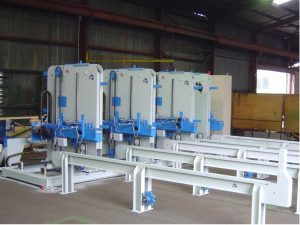
Traditionally used for Drymill stacking of timber, Vertical stackers provide fast, accurate handling of boards with minimal mechanical abrasion to the board surface, eliminating surface marks on the timber surface. Recent developments see Vertical stackers being used along with mechanical handling or robotic sorting systems to sort products and feed them to multiple Vertical Stackers
Summary
When considering the purchase of a timber board sorting and stacking machine for a sawmill – whether that be a manual handling system, or an automated one, several factors should be evaluated to ensure the equipment meets the operational needs of the mill, improves efficiency, and contributes to the overall profitability. Here’s a comprehensive list of considerations:
- Capacity and Throughput
Volume of Production: The machine should match the production capacity of your sawmill. Assess the throughput required (e.g., boards per minute or per hour) and whether the machine can handle peak production times.
Size of Boards: The machine must be able to handle the specific sizes of boards produced by your sawmill, including varying lengths and thicknesses.
- Sorting and Grading Features
Automation and Precision: Look for a machine that offers automated sorting capabilities to quickly and accurately categorize boards based on dimensions, quality, and defects.
Sorting Mechanism: The sorting system should be flexible to handle different grades or types of timber. Check if the machine supports sorting by length, width, or visual defects.
Customisable Settings: Some systems allow for custom sorting parameters, so you can tailor them to your production standards.
There are many things to assess and consider before you commit to a sorting and stacking system for your sawmill. You should gather input and ideas from experienced industry specialists and from other sawmillers in the industry.
At AE Gibson & Sons Pty Ltd, our design engineers have decades of experience in processing timber products effectively and efficiently, including all types of sorting and stacking methods from manual systems through to various automated methods. So which one is right for your mill? Give us a call and we will be happy to offer our experience and advice.
Contact us for more information and visit our timber stacking and sorting solutions here.